
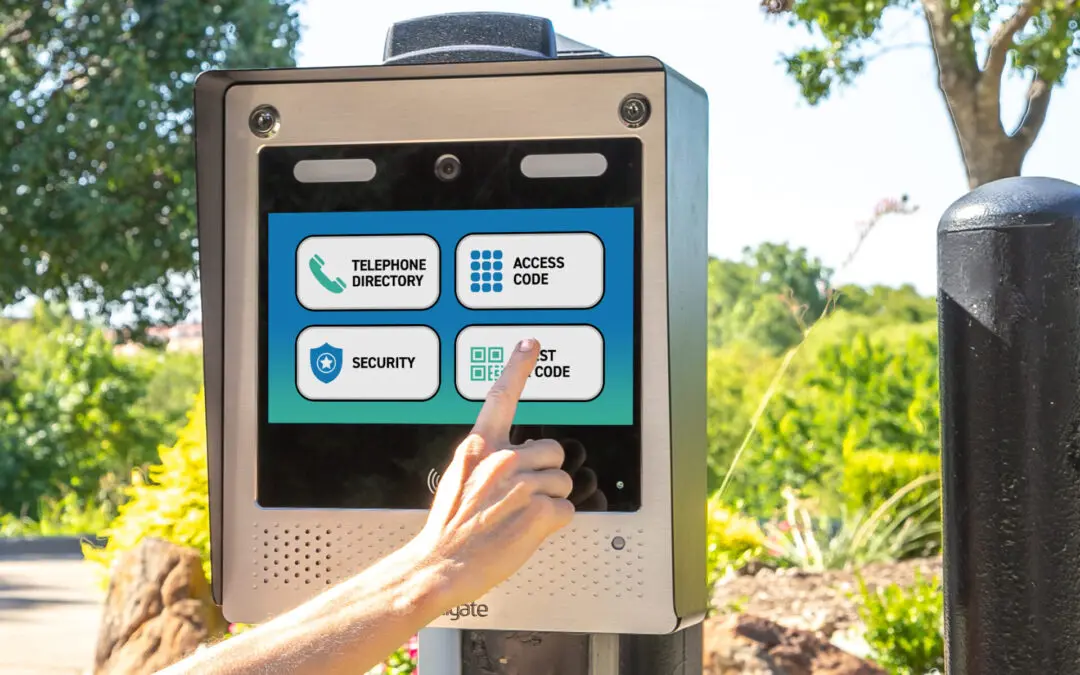
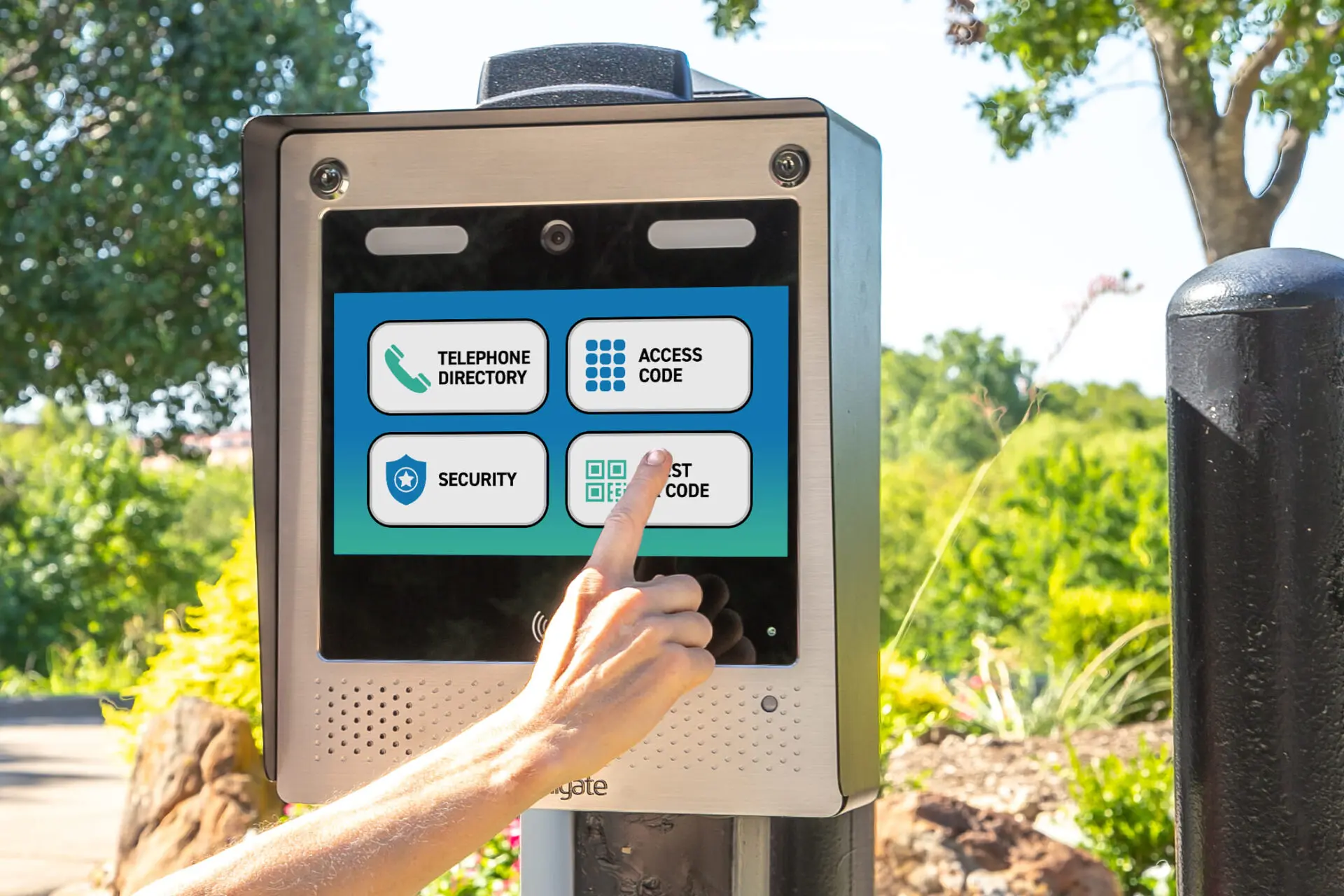
Managing visitors efficiently and securely is a crucial part of any busy property, whether you manage a multi-family community, gated entrance, commercial building, or HOA-managed neighborhood. This need has led to the development of sophisticated visitor management systems, which streamline check-ins, enhance security, and improve the overall visitor experience by pairing video intercom communication with modern access control and resident calling capabilities. These systems come in a variety of configurations, with the most common being pedestal mounts and surface mounts for video intercom systems at entrances, gates, and lobbies. Each configuration offers distinct advantages and considerations, depending on the needs and space of the property, including approach visibility, available mounting surfaces, and outdoor durability. In this blog, we’ll compare pedestal mount and surface mount visitor management systems to help you decide which might be the best choice for your property based on visitor flow, location constraints, and security priorities.
Pedestal Mount Video Intercom Systems
A pedestal mount video intercom is installed on a standalone post, commonly used for outdoor access points like vehicle gates or driveways, where drivers need quick, clear communication at the entry point. Its elevated and/or stand-alone position makes it ideal for visibility from a distance and overall accessibility at high-traffic entrances. It is typically installed at the height of a driver’s side vehicle window so a driver may access it while remaining inside their vehicle, keeping vehicles moving and reducing delays at the gate.
Pros:
- Weather-resistant and durable, designed to withstand harsh outdoor conditions.
- High visibility, making it easy for visitors or drivers to find.
- Easy access for both pedestrians and vehicles.
- Tamper-resistant, offering extra security.
Cons:
- Takes up more space, requiring a clear area for installation.
- Exposed to the elements, requiring regular maintenance to ensure functionality.
- Less discreet, making it more visible than surface-mounted options.
Potential for Obstruction: If not positioned correctly, a pedestal system could obstruct entry points, leading to bottlenecks or inefficiencies in visitor flow.

Surface Mount Video Intercom Systems
Surface-mount video intercoms are fixed directly onto a wall or flat surface, making them a practical choice when you already have a location suitable for mounting at an entrance. They’re often used at partially covered entrances or certain indoor settings, such as high-rise building entrances, lobbies, reception areas, and secured doors, but can be adapted for outdoor use with proper weatherproofing and thoughtful placement to limit direct exposure to rain and sun.
Pros:
- Compact design, saving space and blending seamlessly with the existing environment.
- More discreet, ideal for areas where you don’t want the intercom to stand out.
- Lower maintenance when installed indoors or in protected areas.
- Easy installation on any flat surface.
Cons:
- Less visible in high-traffic or outdoor areas, which may make them harder for visitors to locate.
- May need additional protection against the elements if used outside.
- Typically less durable than pedestal mounts in outdoor environments.
Which One Should You Choose?
Pedestal Mount: Perfect for outdoor, high-traffic areas where visibility and durability are important, like vehicle gates or parking areas where visitors need to find the unit quickly and use it from their vehicle.
Surface Mount: Ideal for indoor or more sheltered locations where space is limited, and a more discreet setup is desired such as lobbies, doors, and covered entryways with an existing wall or column.
Your choice should depend on the layout of your property, the environment, and your preference for visibility or discretion, as well as where the intercom will be used most (vehicle lane vs. doorway) and how the wiring can be routed cleanly. By considering these factors, you can choose the video intercom system that best fits your security needs and supports a smoother visitor entry experience.
FAQ: Pedestal vs. Surface Mount Video Intercom Systems
- What is the difference between pedestal mount and surface mount video intercom systems?
Pedestal mount units are installed on a standalone post, often used at drive-up locations like vehicle gates and driveways. Surface-mount units attach directly to a wall or flat surface and are often used at doors, lobbies, or sheltered entrances. - Which mount type is typically best for vehicle gates and drive-up entrances?
Pedestal mounts are commonly used for vehicle gates because they can be positioned where cars stop and where drivers can use the system without leaving the vehicle. - Which mount type is typically best for doors, lobbies, and sheltered entryways?
Surface mounts are commonly used on a wall or flat surface at doors and lobbies, and they can be adapted for outdoor use with proper weatherproofing. - Do CellGate video intercom models support different mounting options?
Yes. Details on mounting options for specific Watchman video intercom models are found in the technical specifications for each model. For example, W461/W462 is suitable for surface mount or flush mount. Pedestal and recessed mount options are available for W480/W482. - Will CellGate work with my existing gate or door?
CellGate products connect easily to virtually all manual and automatic gates, electronic lock controllers, and electronic door openers. - Can I create visitor PIN codes and control when they work?
Yes. You can create many PIN access codes in TrueCloud Connect or the CellGate app and set validity rules like date/time ranges, days of week, usage limits, or cancellation. - Can residents receive video calls from visitors and manage access through the app?
Yes. Residents can receive streaming video calls and manage visitor access through the CellGate app and TrueCloud Connect on supported models. - Is cellular coverage required, or are there internet options?
CellGate products offer both wired internet and cellular (Verizon and AT&T LTE networks) connectivity options. - Can I open the gate or door remotely if I’m not on-site?
Yes. You can open, hold open, or close gates/doors via TrueCloud Connect and also via the CellGate app. - How do camera images and video work on CellGate systems?
You can retrieve still images through TrueCloud Connect or the CellGate app. Video footage is available upon request through our support team, ensuring secure handling and reliable delivery when it matters most. Our cameras also feature infrared technology to support clear visibility in low-light conditions.