This guide covers everything you need to know about the remote control gate opener. Modern homeowners can choose from swing, sliding, or barrier arm styles when selecting a remote control gate opener system.
Remote-controlled gates encompass two different fundamental features. One is a property owner’s own personal access in/out of a location, and the second is visitor management. Old-fashioned clicker style remotes are still often utilized for both a property owner’s and a visitor’s entry. This requires the clicker is near enough to the property access point’s entry hardware to communicate with it. What has greatly changed, however, is the advent of gates and doors remote-controlled by app-based applications. These new tools grant anyone entry into a property from wherever the app is located, anywhere in the world. So, proximity no longer is a requirement with the latest remote-controlled gate opener systems.
Let’s review a little bit of the history of remote-controlled gates.
People who that utilize drive-up gates for security–that do not have a remote to operate them–don’t love getting out of their vehicles to do so. Manually opening and closing gates takes a number of seconds on both sides. This is unpleasant if the weather is extra hot, cold or rainy.
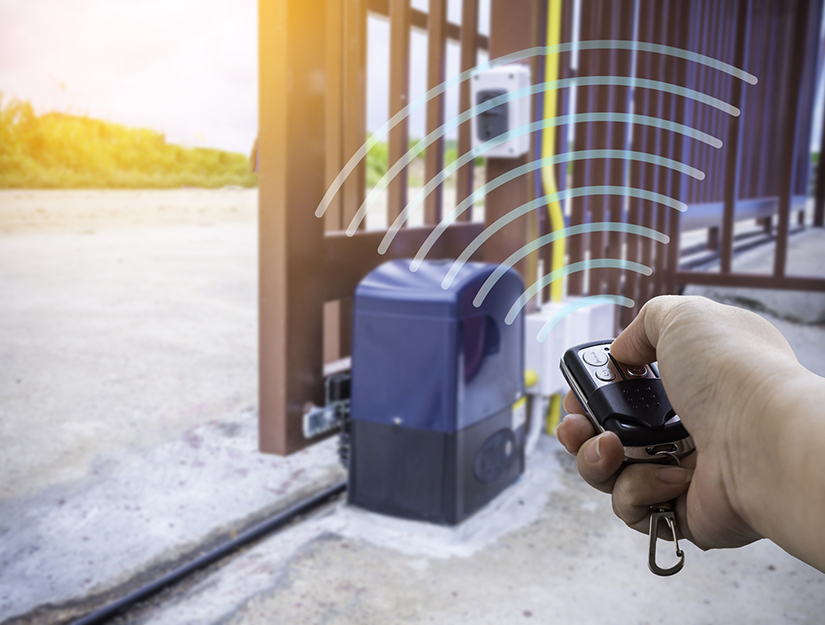
The convenience factor is one reason why the first remote-controlled gates were invented decades ago. Many gates were controlled by small handheld remotes, fobs or clickers utilizing RFID or Bluetooth technology. These devices were simply pressed when in close proximity to the gate to open or close it. These types of gates are great if the remote holder is nearby to open or close the gate for themselves. Unfortunately those technologies cannot open or close gates from great distances. For example, if a user with an RFID or Bluetooth technology-based remote-controlled gate was 2 blocks away, their remote does not open the gate for a visitor that just arrived. Most consumers agree that such remotes are great for property owner access. However, they are less convenient for managing visitor entry because of the need for close proximity.
Remote-controlled gates with hardwired internet or cellular connections.
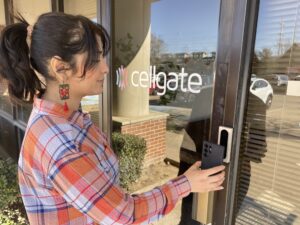
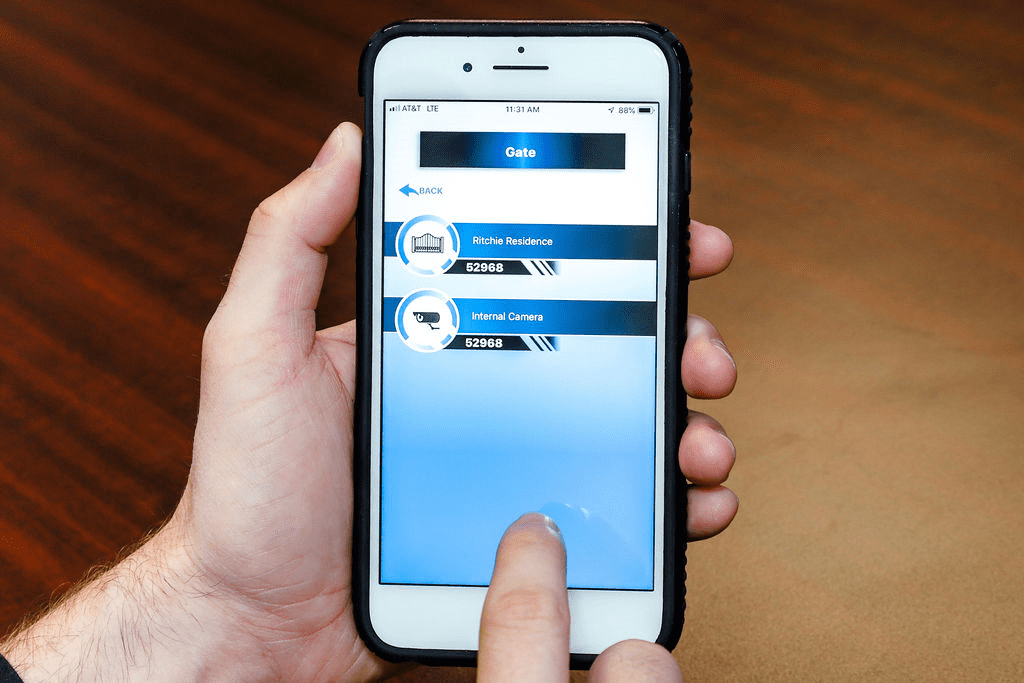
Newer gates use hardwired internet connections or cellular networks. This technology provides a way to communicate to smart phones and web-based portals instead of just with fobs and clickers. Users of these remote-controlled gates open or close such gates from wherever they are via an app or portal. The only requirement is that their smartphone is connected to a cellular network or that they have internet access. This greatly expanded the convenience factor for such gate users. They now check the status of their gate, and open or close it for a visitor—from wherever they are. These newer technologies expand gate management tremendously. What previously only occured at the gate itself is now controlled and managed from anywhere.
Some gate manufacturers that utilize hardwired internet or cellular for their systems also log detailed records of all activity at such gates. This means visibility of utilized codes for access, pictures of entrants and exiters, and time and date stamps for all access attempts. This functionality makes these gates more secure and convenient than ever.
Conclusion
When in the market for a remote control gate opener, consider what functionality is important to you. If simply granting access for yourself when you come and go is all you need, then an RFID or Bluetooth remote controlled gate system is sufficient. If you prefer the ultra-convenience of managing your gate from wherever you are, and appreciating the peace of mind that comes from detailed logs of who comes and goes and when, then a hard-wired internet or cellular based remote-controlled gate system is a better choice.
Frequently Asked Questions
What is an automatic gate opener and how does it work?
An automatic gate opener is a motorized system that allows gates to open and close without manual operation. These systems typically use sensors, timers, or remote signals to control gate movement, providing convenient access control for residential and commercial properties.
What makes a cellular gate opener different from other remote-controlled gate systems?
A cellular gate opener, which adds a secure access control layer to an existing gate and operator, differs from traditional remote control gate openers because it delivers true remote access control rather than on-site, proximity-based gate operation.
Traditional remote control gate openers rely on short-range RF remotes, key fobs, or Bluetooth credentials that only work when someone is physically near the gate. A cellular gate opener extends access beyond those limits by allowing owners to manage gate access remotely, from their smartphones, anywhere there is cellular coverage or an internet connection.
CellGate remote control gate opener systems are available with both cellular and wired internet connectivity options. Both options support secure, cloud-based remote gate control without replacing existing gate hardware.
How does a wireless gate opener provide access control without hardwired connections?
CellGate offers multiple solutions that function as a wireless gate opener, giving properties secure access control without requiring the use of hardwired internet connections if not feasible. The alternative option CellGate provides uses cellular LTE via AT&T or Verizon and cloud-based technology, eliminating the need for trenching, conduit, or Ethernet while maintaining reliable, real-time control.
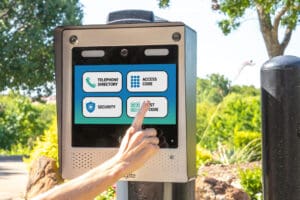
For properties that require visual verification, CellGate Watchman® combines wireless gate opening with live video and two-way audio of visitors at the gate. Watchman can connect over cellular, allowing residents or staff to see and speak with visitors before granting access remotely. The gate opens wirelessly, adding visibility and control without the need for network cabling. (Most Watchman models are also available on wired internet, though, if preferred, and the same ability to open the gate remotely/wirelessly is possible with those models. They simply require connecting to the internet, hardwiring at the property itself.)
Offering both wired and wireless configurations to match evolving site requirements, CellGate’s Entría® can also function as a wireless gate opener. When deployed wirelessly, Entría uses cellular communication to manage access permissions and trigger gate operators without hardwired connections, making it ideal for properties that want flexibility and long-term scalability. Entría® wired internet connection options are also available, with the same wireless/remote control functionality as the cellular version(s).
Can I operate my remote control gate opener when I’m not physically present at the property?
Yes, depending on the type of system you choose. Traditional remote control gate opener systems work within a specific range, but advanced options like CellGate’s wired internet or cellular-based systems allow you to control your gate from your smartphone (via TrueCloud Connect) where you have cellular coverage or an internet connection. This gives you complete remote access to manage visitor entry.